
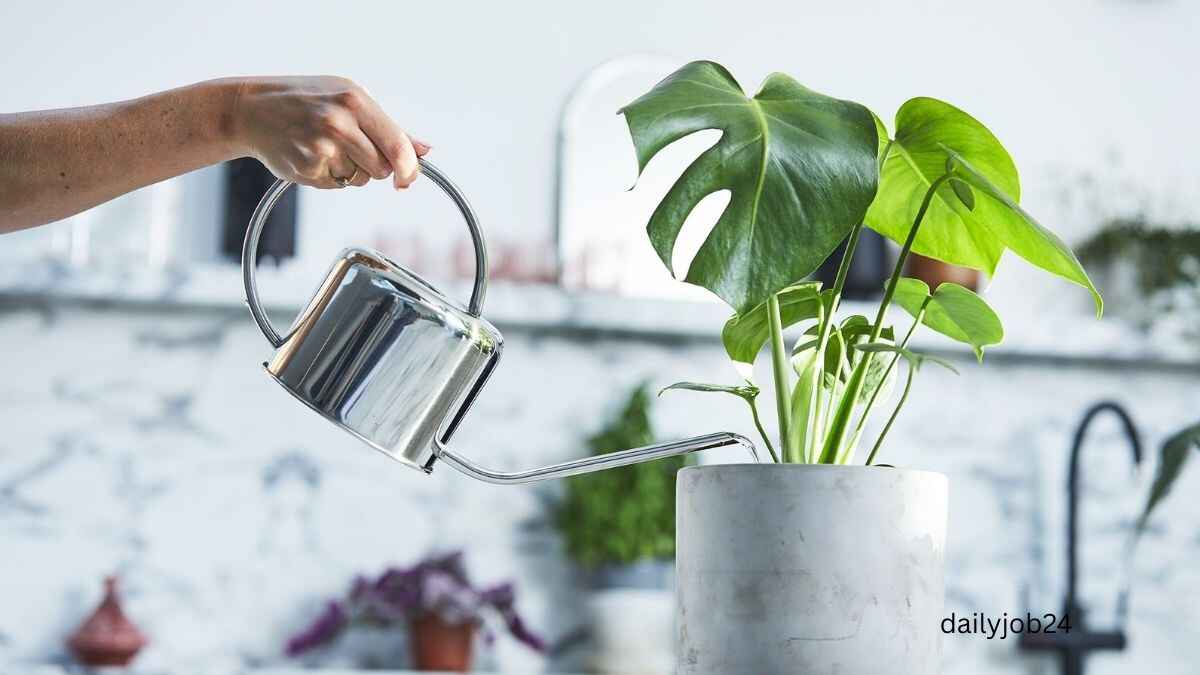
Water Indoor Plants: The most significant but the least comprehended aspect of indoor plants care is watering. Indoor plants can be confusing to beginners on how to water them on a regular basis. Other plants die in a short time due to excess water whereas others dry up due to lack of water. Actually, one of the most frequently used causes of the failure of indoor plants is overwatering.
The thing is: no universal watering schedule fits all the plants. The watering frequency depends on different plants, environment and different seasons. This amateur guide will make you know when and how to water your indoor plants in the right way to maintain them in good and healthy condition.
Best indoor plants for apartments
Why Proper Watering Matters
Water is necessary to the plants as it:
- Helps transport nutrients
- Supports photosynthesis
- Holds the plant cells straight and well.
Regulates temperature
Lack of sufficient water leads to drying up of plants and their stagnation. Excess water will kill roots and cause root rot. The aim is moderation in watering neither too dry nor too wet.
No set timetable (and That Is As It Should Be).
Many beginners ask:
Daily watering of my plants?
“Once a week?”
“Twice a week?”
The appropriate response is: it depends.
The frequency of watering is based on:
- Plant type
- Pot size and material
- Soil type
- Light exposure
- Room temperature and humidity.
Season (summer vs winter)
Watering should be done according to the needs of the plants, rather than watering as per the calendar.
Beginners Guide to General Watering Rule.
A simple beginner rule:
Indoor plants can only be watered when the top 1 2 inches of soil are dry.
Feel the soil with your finger. If it feels dry, water. If it feels moist, wait.
This technique is effective with a majority of domestic plants.
Frequencies of Watering Various Indoor Plants.
1. Low-Water Plants (Every 2–3 Weeks)
They keep water in the leaves or stems of these plants and favor dry soil.
Examples:
- Snake plant
- ZZ plant
- Succulents
- Cactus
Clue: It is more harmful to overwater the plants as opposed to underwatering them.
2. Water (Moderate):
This can be defined as plants that require water once a week.
Majority of the popular indoor plants belong to this category.
Examples:
- Pothos
- Philodendron
- Spider plant
- Peace lily
- Rubber plant
Water when the topsoil becomes dry, normally after every 7- 10 days.
3. High-Water Plants (2 -3 Times per Week)
These plants like warm soil that is always wet.
Examples:
- Ferns
- Calatheas
- Fittonia
- Some palms
They are not to become dry, but soil must never be wet.
Signs You Are Overwatering
The most common newbie error is overwatering. Watch for these signs:
- Yellow leaves
- Soft or mushy stems
- Frying despite being wet soil.
- Mold or fungus on soil
- Bad smell from pot (root rot)
Fix: No more watering, dry soil, and good drainage.
Signs You Are Underwatering
Plants that are under watered exhibit varied symptoms:
- Dry, crispy leaves
- Brown leaf edges
- Drooping or curling leaves
Pot edges pulling away of the soil.
Fix: Have your water pitched dry and re-train your watering schedule.
Proper Way of watering indoor plants.
Correct watering is only as significant as the frequency of watering.
How to Waterplants Step-by-Step.
Test the soil moisture with your finger.
Add water gradually until the water is drained.
Pour out all the spare water on the tray.
Standing water shall not put pots in position.
This will make sure that roots do not drown.
Does Pot Size and Type Matter?
Yes—very much.
Small Pots
Dry out faster
Need more frequent watering
Large Pots
Hold moisture longer
Need less frequent watering
Pot Materials
Terracotta pots: Dry faster
Plastic pots: Retard dampness.
Ceramic pots: Intermediate water conservation.
Newcomers will tend to overwater plants in huge or plastic pots.
The Influence of Light on the frequency of watering.
The sun contributes to watering requirements.
Bright light Photoperiod Mesophilic plants utilize more water.
Low light: Plants consume less water.
Low-light rooms should have less frequent watering of the plants.
Summer vs. Winter. Seasonal Watering.
- Summer
- Faster evaporation
- More growth
- Water more often
- Winter
- Slower growth
- Less evaporation
- Water much less
Most plants also require half the amount of water during winter seasons as they do during summer seasons.
The most appropriate time to water indoor plants is best.
The best time is:
Morning or early afternoon
This is so that plants are able to absorb water before night temperatures drop. Watering should not be done late at night, particularly during the winter.
Should You Use Tap Water?
Majority of the indoor plants are susceptible to tap water though there are certain species that are sensitive.
Tips:
Allow tap water to stand overnight to dechlorinate.
Use room-temperature water
Avoid very cold water
Delicate plants (such as calatheas) like filtered or distilled water.
Errors to avoid when it comes to watering.
Watering on a fixed schedule
Failure to check soil prior to watering.
The pots were used without drain holes.
Allowing plants to lie in water trays.
Fertilizing everything with water.
Each plant is unique- watch and change.
Watering Dummies: Simple Watering Tips.
Fewer plants = easier care
- Mark the watering requirements of the label plants.
- Check it with a moisture meter.
- Begin with low maintenance plants.
- Wait until the next day in doubt.
One can revive a drowned plant than a drowned plant.
Conclusion
Which is why how frequently to water indoor plants? The truthful reply to this is: when they require it. You will gain confidence by determining the moisture level of the soil, knowing your type of plant and even watching your plant.
The watering is not the matter of rules but the matter of attention and equilibrium. It will take time and practice to be aware of the rhythm of your plants and keep them healthy, green and flourishing.






[…] How Often Should You Water Indoor Plants? (Beginner Guide) […]